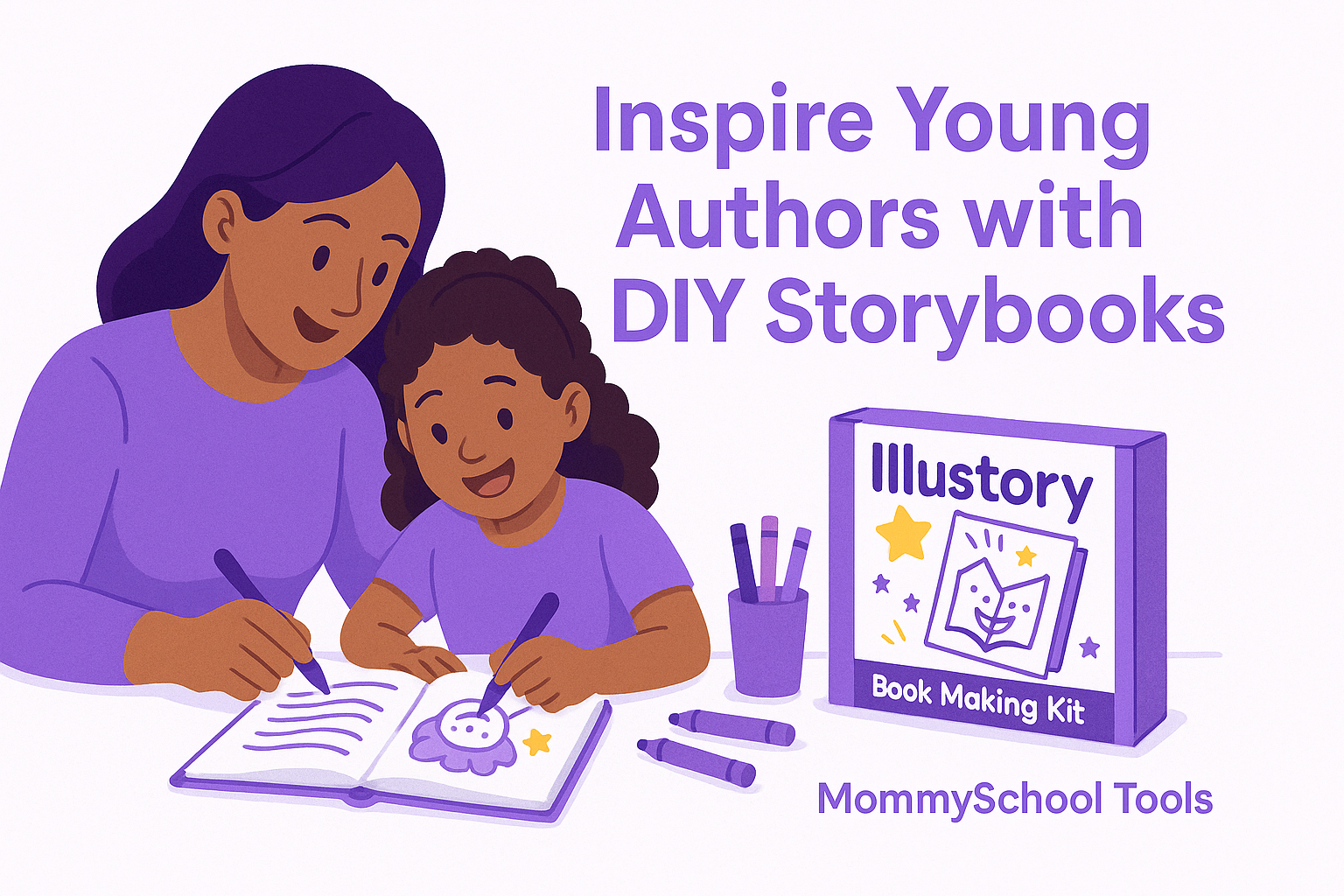
Inspire Young Authors with DIY Storybooks
Guide kids from brainstorm to published author using a real book-making kit. Scaffold drafting, revising, and illustrating—then celebrate with a keepsake book.
Disclosure: This post contains affiliate links. As an Amazon Associate, we may earn from qualifying purchases at no extra cost to you.

Lulu Jr. Illustory Book Making Kit
All-in-one kit for young writers: storyboard pages, markers, instructions, and prepaid shipping for a professionally printed, bound book.
View on AmazonLearning Objectives
- Plan a coherent narrative with beginning–middle–end structure.
- Draft and revise sentences for clarity, sequence, and detail.
- Pair illustrations with text to support meaning and tone.
- Publish a final “author copy” to build motivation and pride.
Materials
- Lulu Jr. Illustory Book Making Kit
- Pencils, erasers, colored pencils/markers
- Sticky notes for revision reminders
- Timer for short drafting sprints (8–12 minutes)
Project Flow (3–5 Sessions)
- Session 1 — Brainstorm & Plan: Choose a topic and audience. Use the storyboard to outline 6–10 pages (B–M–E). Add a 1-sentence summary for each page.
- Session 2 — Draft Words First: Write simple, clear sentences for each page. Read aloud to check sequence and voice. Star pages that need more details.
- Session 3 — Revise & Edit: Add vivid verbs and sensory words. Check capitals, spacing, and punctuation with a kid-friendly checklist.
- Session 4 — Illustrate: Sketch lightly, then color. Ensure pictures match text and show actions/feelings.
- Session 5 — Finalize & Ship: Complete the kit forms, do a last read-through, and mail for printing. Plan an “Author Celebration.”
Sentence stems: “First, …” • “Then, …” • “Next, …” • “Finally, …” • “I felt … because …”
Differentiation
- Support: Provide page-by-page sentence starters and word banks; allow dictation before writing.
- On-Level: Require 2–3 sentences per page and one vivid verb per spread.
- Advanced: Add dialogue, paragraphing, and a simple author bio/back-cover blurb.
Assessment & Reflection
- Checklist: B–M–E present, capitals/punctuation, pictures support meaning.
- Peer Swap: Trade drafts and give one “Glow” and one “Grow” note.
- Author’s Note: Write 2–3 sentences about your inspiration and message.
Extensions & Family Connection
- Record an audio read-aloud of the final book for relatives.
- Create a class/library shelf featuring student-authored books.
- STEM crossover: write a “how-to” technical book (e.g., planting seeds, building a model).
Includes storyboard template, revision checklist, and author celebration ideas.
Tip: Keep sessions short and celebratory. Publishing a real book is powerful—let the joy drive the writing!